Let’s start with the truth most folks don’t want to admit—if your coffee tastes dull, dusty, or weirdly like last night’s garlic bread, it might not be your brewing skills. It might just be where—and how—you’re storing your beans.
We get it. You bought the good stuff. Whole beans. Fresh roast. Maybe even from a local roaster (bonus points). But then? You stashed the bag in the pantry, next to your spices, flour, or worse—your onions.
And now your bold brew tastes like stale air and regrets.
Here’s the deal: Coffee is a fresh product. It’s porous, delicate, and quick to degrade. And when it’s stored wrong, it soaks up whatever’s nearby like a sponge with zero judgment. So unless you like hints of cumin and cardboard in your morning cup, you’re going to want to rethink your storage setup.
Why Proper Storage Matters More Than You Think
Coffee, especially once roasted, starts losing flavor fast. Not weeks later. Not days. Hours. The second beans are exposed to oxygen, moisture, heat, or light, they begin to lose the oils and volatile compounds that make them special. Those rich chocolate notes? That citrus sparkle? Gone in a flash if you’re not careful.
And here’s the kicker: your brewing method can only do so much. You can’t make stale beans taste fresh. You can brew them perfectly and still end up with disappointment in a cup.
So let’s fix that.
Meet the Four Coffee Killers
Every time you open a bag and store your beans somewhere that isn’t sealed and safe, the following villains creep in to ruin your brew:
1. Oxygen – Air is the main culprit in coffee degradation. Exposure to oxygen oxidizes the beans, dulling the flavor and aroma. If you’re keeping beans in a paper bag with a roll-and-clip method, you’re essentially letting them age in dog years.
2. Moisture – Coffee hates humidity. Even ambient moisture from the air can start to pull at the oils, encourage mold, or just make your beans taste off. Moisture exposure is what turns bold into blah.
3. Light – Just like your eyes in the morning, coffee hates light. Those lovely amber jars you see in some Instagram posts? Aesthetic, sure—but they let in more light than your beans can handle.
4. Heat – Don’t store your coffee near your stove, oven, or sunny window. Heat accelerates flavor loss and encourages early staleness. If your beans are hot to the touch from where you keep them, move them immediately.
So Where Should You Store Coffee?
The best storage solution is simple:
- Cool
- Dark
- Dry
- Airtight
Let’s break this down into a few options.
Option 1: A Dedicated Airtight Canister
This is the gold standard. A vacuum-sealed, lightproof, airtight canister keeps your beans protected on all four fronts.
Look for:
- Stainless steel or ceramic body (no light penetration)
- One-way valve to allow degassing without letting air in
- Tight-sealing lid or vacuum pump seal
Pro tip: Brands like Fellow’s Atmos or Airscape offer excellent solutions. They’re not just about style—they’re engineered to keep your beans fresh longer.
Option 2: Resealable Bags with Valves (The Good Kind)
If your beans came in a resealable bag with a one-way valve and a zip closure, you’re in decent shape—as long as you store that bag in a dark cabinet away from heat sources.
But be careful: many grocery store “fancy” bags have the valve, but not a real seal. Once opened, they don’t close tightly and become glorified paper bags.
Use a strong chip clip and put that bag inside another airtight container if you’re going this route.
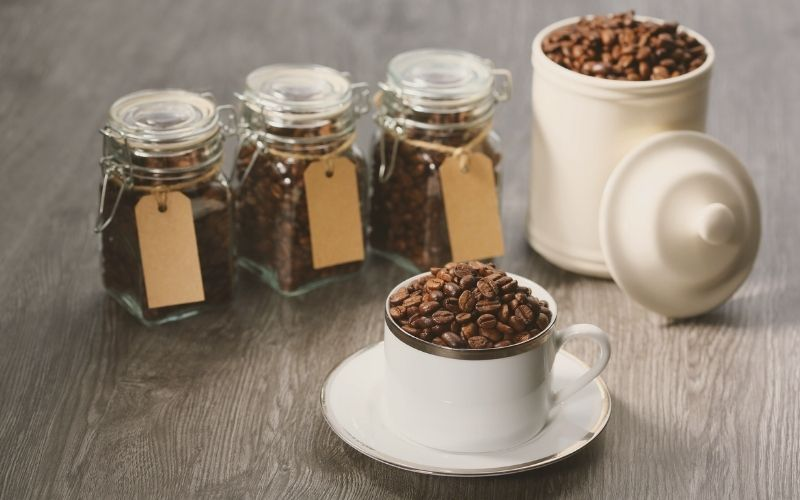
Option 3: Mason Jars (With a Warning)
If you’re using mason jars, make sure they’re stored inside a cabinet or pantry away from light. Clear glass lets in UV and visible light, which deteriorates beans over time. Also, be sure they’re sealed tight. Mason jars with rubber gaskets work better than standard metal lids.
Want bonus points? Use an opaque silicone sleeve or wrap around the jar to block light entirely.
The Freezer Question (Yes, We’re Going There)
You’ve probably heard two schools of thought:
- “Freeze your coffee!”
- “Never freeze your coffee!”
Here’s the nuanced answer: You can freeze coffee—if you do it right.
When to freeze:
- You bought a large quantity of beans you won’t use within 2–3 weeks
- You want to portion out and preserve peak freshness
- You store them in airtight, moisture-proof, individual vacuum-sealed bags
How to freeze properly:
- Divide your beans into single-use batches
- Use vacuum-sealed or zipper freezer bags with the air removed
- Only open one batch at a time
- NEVER return beans to the freezer once thawed
What not to do: Open your main bag every morning, scoop out what you need, and toss it back in the freezer. That invites condensation, freezer burn, and flavor degradation. Just… don’t.
The Pantry Problem
So many folks keep their beans in the pantry. It seems logical, right?
But here’s what lives in your average pantry:
- Heat from the kitchen
- Humidity from stored foods
- Odors from onions, garlic, spices, cereal, cardboard boxes
- Frequent light from opening and closing the door
That’s a flavor-ruining cocktail if we’ve ever seen one.
If your only option is a pantry, at least store your beans in a quality airtight container placed in a low shelf (away from the top where heat rises) and far from anything pungent.
And for the love of flavor—don’t store them next to your trash can.
Signs Your Coffee Has Gone Stale
Not sure if you’ve been doing it wrong? Here are a few signs:
- The aroma is flat or faint
- The beans feel dry or crumbly instead of slightly oily
- The brewed cup tastes bitter, dull, or bland
- You find yourself adding more and more grounds just to get a strong cup
- It tastes like… your pantry
Coffee should taste alive. Complex. Smooth. If yours tastes tired or lifeless, improper storage might be the reason.
Best Practices in a Nutshell
Here’s the cheat sheet:
- Buy fresh – Aim for beans roasted within the last 2 weeks
- Buy small – Only as much as you’ll use in 2–3 weeks
- Keep it airtight – Use proper containers or quality resealable bags
- Avoid light and heat – Store in a cool, dark place, away from your stove
- Freeze carefully (or not at all) – Only in airtight portions and only if needed
Bonus Tip: Label Your Beans
Use a small piece of masking tape and write:
- The roast date
- When you opened the bag
- What method you’re using to brew it
Why? It helps you rotate properly, experiment consistently, and become the kind of coffee drinker who knows what works and what doesn’t. That’s how you level up.
What About Ground Coffee?
If you’re storing ground coffee the same way—just know it’s even more sensitive. Ground beans have more surface area exposed to air, so they go stale faster.
We recommend:
- Only grinding what you need per brew
- If you must store ground coffee, keep it sealed and use it within 5–7 days
Better yet: Buy a decent hand grinder and grind fresh. It makes a difference you can taste.
A Word from Dark Shift Coffee Co.
At Dark Shift, we don’t just roast coffee for flavor. We roast it for fuel—for the ones who work the night shift, the early shift, or both. The last thing you need is a cup that tastes like your spice rack.
Our roasts are bold, clean, and carefully bagged in high-barrier packaging with resealable zips and degassing valves. But once you open it, the game’s in your hands.
Store it like it matters. Because it does.
To Wrap It Up
Your coffee storage setup doesn’t have to be fancy. It just has to be right.
Airtight, cool, dark, and dry. No exceptions.
Whether you brew with a $15 pour-over or a $2,000 espresso machine, it’s what’s in the beans that counts—and that means treating them with the respect they deserve after they leave the roaster.
Protect your flavor. Honor the grind. And never again settle for a cup that tastes like it slept in your pantry.