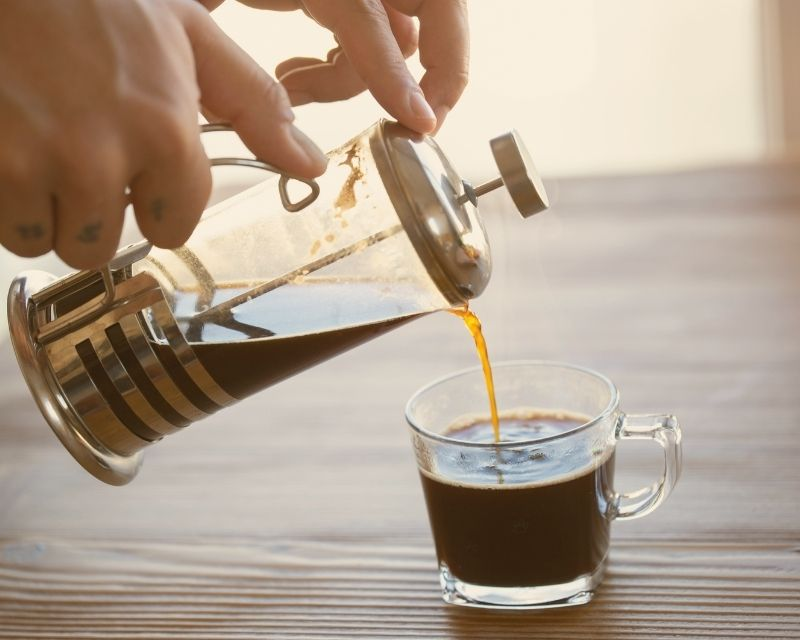
Let’s get one thing out of the way—French press coffee is not fancy. It’s not for latte art, or rainbow-swirled milk, or sipping in a glass-walled café where the barista has more tattoos than you have shirts.
Nope. The French press is for the working man. The builder. The late-night thinker. The early riser who doesn’t want to push buttons or decode a machine first thing in the morning. It’s for folks who want a rich, bold, full-bodied cup that hits different because it’s real.
If that sounds like you, pull up a chair.
Why the French Press Still Matters
The French press has been around since the 1800s for a reason—it works. And in a world where even your refrigerator has Bluetooth, sometimes less tech is better.
This method doesn’t use paper filters. It doesn’t rob your coffee of the natural oils that carry flavor. It doesn’t need electricity (just hot water). It’s honest, straightforward, and unfiltered. Just like most of the people who love it.
With the French press, you get:
- A fuller body. Those oils and microgrounds give coffee a texture that pour-over drinkers can only dream of.
- No waste. No pods. No filters. Just grounds, water, and grit.
- Control. You decide the strength, steep time, and flavor.
But if you want that richness without the bitterness or sludge, there are a few rules you’ll want to follow.
How to Use a French Press (Without Ruining Your Coffee)
1. Use the Right Grind
This is non-negotiable: you need a coarse grind for French press. Not medium. Not “I bought pre-ground coffee from the grocery store.” Coarse.
Why? Because fine grinds pass through the mesh filter and end up in your cup. That’s where the gritty sludge comes from. It’s not the press’s fault—it’s your grind.
A good rule of thumb: if your grounds feel like sand, they’re too fine. You want them to feel like sea salt or breadcrumbs. Whole bean is best. Grind it fresh right before you brew.
(Need help? We only offer whole beans for a reason. You can check out Standard Issue or Tried by Fire — both bold choices that shine in a French press.)
2. Heat Your Water Properly
Don’t just boil and pour. That’s how you scorch the grounds.
The sweet spot is 195°F to 205°F. If you don’t have a thermometer, bring your water to a boil and let it sit for 30 seconds before pouring.
Too hot? You burn the coffee. Too cold? You under-extract and end up with a weak cup.
Coffee is like revenge. It’s best served calculated.
3. Use the Right Ratio
Start with a 1:15 ratio of coffee to water.
- That’s about 30g of coffee to 450g (or ml) of water, if you’re weighing.
- Or roughly 2 tablespoons of coffee per 6-ounce cup, if you’re scooping.
Want it stronger? Try 1:12. Lighter? Try 1:17.
But don’t guess. At least not until you’ve got your baseline locked in.
4. Pour and Stir
Pour the water evenly over the grounds. Stir gently. (Wooden spoon or chopstick is best—metal can crack your glass if you’re not careful.)
Then put the lid on, but don’t press it down yet.
This is where people mess up.
5. Steep for 4 Minutes
Set a timer.
No multitasking, no walking away to feed the dog, no answering emails. Four minutes. That’s all it takes to pull the best from your coffee without pulling the bitterness.
Longer steeping doesn’t mean better—it means over-extraction. That’s how you get harsh, sour notes.
When the timer goes off, then you plunge.
6. The Plunge
Some say plunge slowly. Some say fast. Here’s the truth:
Plunge with intention. Not like you’re trying to win a race, but not like you’re waiting for divine intervention either.
Go smooth. If there’s too much resistance, your grind was too fine.
And only plunge once. Don’t pump it up and down like you’re churning butter.
Once it’s pressed, pour immediately.
Letting the coffee sit in the press turns it bitter, even if it’s already pressed. If you’re not drinking it all at once, transfer the extra to a carafe or thermos.
French Press Don’ts (Learn These and Save Yourself the Regret)
- Don’t use tap water if it tastes bad. Garbage in, garbage out.
- Don’t leave your coffee in the press. It keeps brewing. You’ll regret it.
- Don’t use pre-ground supermarket coffee. It’s almost always too fine.
- Don’t skimp on your beans. Bad beans don’t magically taste good just because you steeped them longer.
To Plunge or Not to Plunge?
Here’s a controversial take: some folks don’t plunge at all.
They let the grounds float, steep, and then gently skim the top layer of coffee off with a ladle or decanter, leaving the grounds behind.
Does it work? Sure. Does it taste different? Slightly. Is it necessary?
Not unless you’re obsessed.
For most of us, a standard plunge is just fine. The difference isn’t worth the trouble unless you’re chasing micro-notes of hibiscus and toasted oat in your cup.
If you’re after flavor and not pretension, just plunge and pour.
When to Choose the French Press Over Other Methods
There’s a time and place for pour-over. There’s a time for espresso. But the French press holds its own, especially in these situations:
1. You Want Body
Pour-over gives you clarity. French press gives you weight. A chewiness to the cup that you feel in your chest, not just your mouth.
If you like bold coffee, you’ll get a fuller experience from the press.
2. You’re Brewing for More Than One
Most presses brew two to four cups at once, which beats the slow, one-cup-at-a-time pour-over when you’ve got company.
3. You’re Off the Grid
No paper filters, no electricity, no problem. Just bring your press, grinder, and a heat source, and you’re in business.
4. You’re Tired of Weak Coffee
If your drip machine makes a sad, brown liquid that tastes like regret, try the press. It extracts more oils, more flavor, and gives you that rich, satisfying cup you’ve been missing.
What Roast Is Best for French Press?
Let’s keep it simple:
- Medium to dark roasts are where the press shines. That extra steep time pulls deep, rich flavors that would be too strong in other brewers.
- Light roasts can be tricky. The press tends to mute the delicate, floral notes and amplify acidity. If you want those bright citrus pops, try a pour-over instead.
Our Standard Issue is a solid daily driver in the press—bold, smooth, and dependable.
Tried by Fire gives you that smoky backbone and punch that cuts through cream, sugar, or exhaustion.
And if you’re looking for a late-day cup, Slow Grind is the decaf that doesn’t taste like it gave up on life.
All available in whole bean only—because if you’re using a French press, we know you care about flavor.
Tools That Make It Easier (But Still Simple)
You don’t need $300 gadgets. Here’s what matters:
- A Burr Grinder. Even a $40 hand grinder is better than a blade. Consistency is everything.
- A Gooseneck Kettle. Optional, but makes pouring easier.
- A Digital Scale. Stop guessing. Coffee rewards precision.
- A Timer. Your phone is fine. But, if you want one just for your coffee
Buy once, brew forever.
Let This Thought Brew…
The French press is not perfect. It’s not clean like a Chemex or concentrated like espresso.
But that’s exactly the point.
It’s bold. Straightforward. Reliable.
Just like the folks who use it.
Whether you’re brewing before the night shift, after the gym, or during that 20-minute quiet window before the house wakes up, the French press is there for you.
No frills. No fluff. Just a mug full of something that tastes like effort.
And in a world that’s become obsessed with shortcuts, maybe that’s exactly what we need more of.